
Yoga Breathing
Take care of your breath and your breath with take care of you!
It’s good to breathe but how often do you practice breathwork.
We breathe every day, it’s an involuntary process. But did you know that by controlling your breath you support your health?
In yoga we call breath work pranayama – when you consciously and deliberately regulate your breathing.
Did you know that when you are stressed, tense or in a state of shock you inhale before you have completed your exhale?
Why not simple watch you’re breathing rhythm now? Observe you’re exhale, without forcing it out, keep it gentle.
What makes pranayama different from just breathing?
A breathing practice is deliberate control of the breath cycle. It acts by regulating part of the cycle. The parts are the exhalation, suspension of breath (with empty lungs), the inhalation, and retention of breath (with lungs full).
Where should I do it and how can I set-up properly?
You should always practice with guidance from a teacher – especially if you’re new to breathwork, we also advise you to always check in with your GP or a health professional if you are managing a health condition.
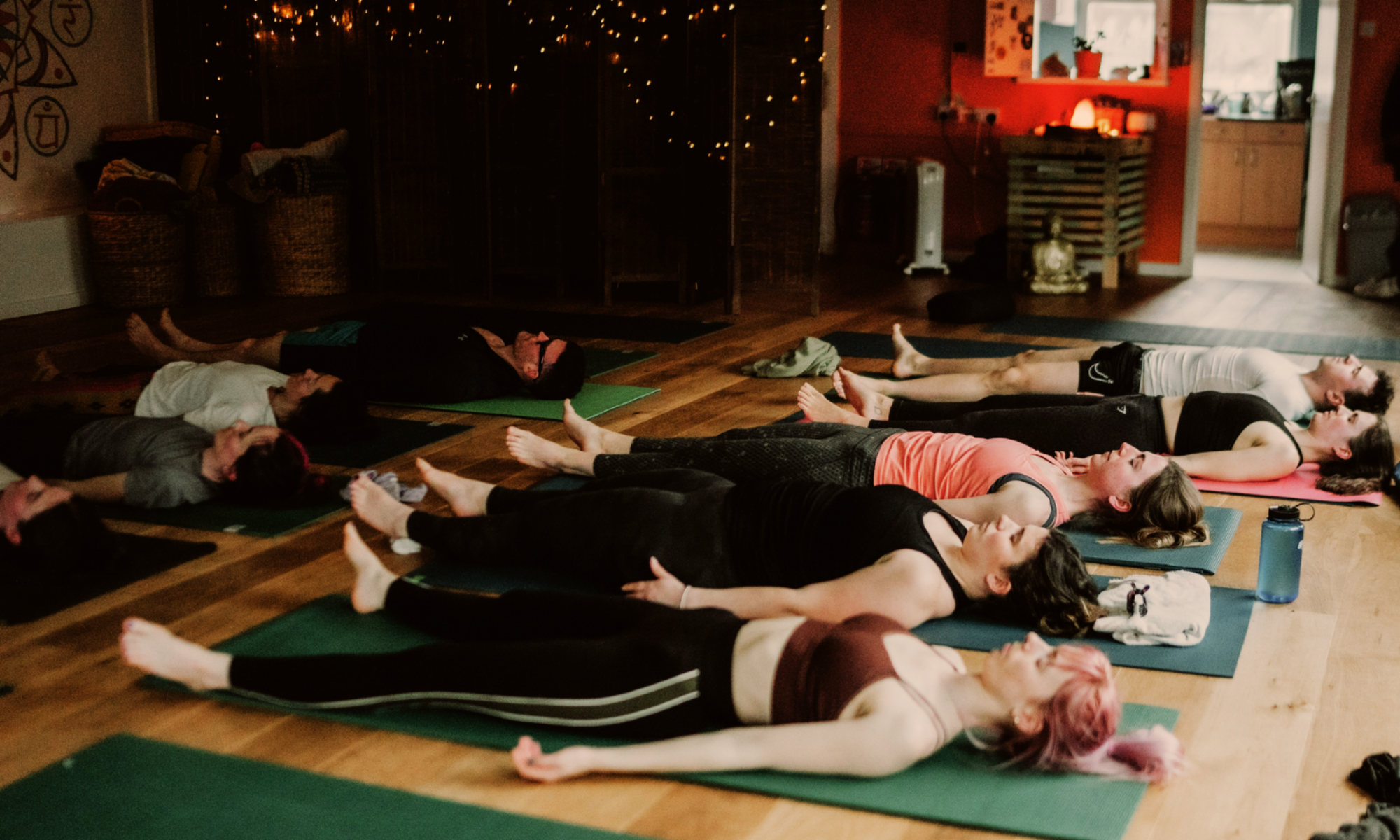
You can practice breathing either sitting or lying down on your back.
Most important is that you feel comfortable – so as little strain as possible, in alignment, if that’s accessible for you.
Sitting straight up in a comfortable position with eyes closed supports alertness. Lying down tends to encourage relaxation.
Whichever you choose – find a grounded position.
If you are on your back, have your feet on the floor, with your knees bent.
It’s best not to stand, for safety reasons.
It’s best to keep your mouth closed softly and breathe through your nose as you practice. Nose breathing is proven to filter out more allergens and dust while boosting your oxygen intake and nitric oxide production!
Breathing using the nose prevents getting a dry mouth and sore or dry throat. It also supports a calmer state as it promotes parasympathetic nervous system activity.
Why not try a simple breath cycle, with some gentle safe regulation?
(1) Inhale, (2) Take a natural and soft retention with breath in, (3) exhale, (4) Hold out (natural, gently).
As you close your eyes and breathe through your nose, begin to create a smooth and subtle sound from the back of your throat. Sense if it’s cool or hot air coming in. Notice the sensations in the nostrils.
Gradually allow your breathing to deepen and lengthen if you can. Pay attention to the pause or retention after inhaling and the suspension after exhaling.
How can I use it to suit my needs?
Inhale and retention are connected to the sympathetic nervous system.
Increasing it can create a state of higher energy and arousal.
The exhale and suspension are connected to the parasympathetic nervous system. Lengthening creates a state of relaxation and calmness.
You can choose the practice for your needs, whether for more energy or to induce a calm state.
Practice…
Keep your hands relaxed on your lap, soften your shoulders and relax your jaw, and keep your mouth soft.
Start with shorter breathing cycles and gradually work toward lengthening them. This supports lung capacity and the nervous system functionality.
Breathing is central to the yogic tradition and your health is your wealth after all!
Come to a class to practice pranayama – email hello@shantibee.co.uk to learn about which class is best for you and your needs.