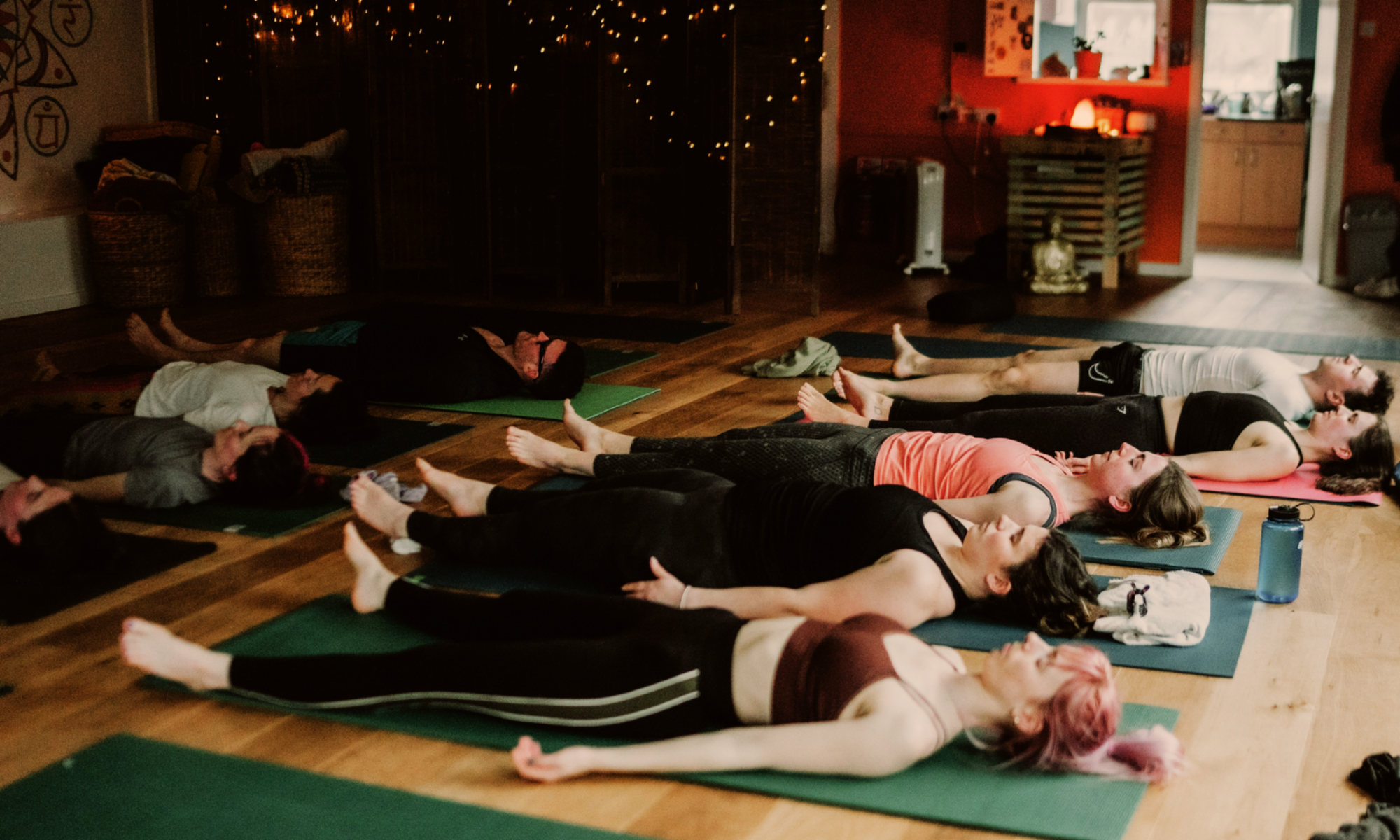


Yoga activities offer opportunity for physiological and psychological growth. They help us connect with the many dimensions of our being, which continually change. To maintain a state of balance, we must be adaptable.
It was once thought that our ability to adapt and grow mentally, was limited to youth, captured in the saying – ‘You can’t teach an old dog new tricks’. This reflects the long-held view that the brain was a fixed and non-renewable organ with a finite number of neurons that cannot be replaced.
We now know this to be inaccurate!
Our brain has an extraordinary ability to grow and reorganize, because it changes in response to experience. This is neuroplasticity – the capacity of the nervous system to make adaptive structural and functional modifications.
In the book ‘The Emotional Life of Your Brain’, Richard Davidson and Sharon Begley explore how emotions are wired to the neural circuits presenting a model based on individual ‘emotional styles’. They argue that because emotional balance is shaped by neuroplasticity individuals can intentionally cultivate greater resilience, more positive outlooks, and better self-awareness. In this book Davidson defines six emotional styles in their book that shape an individual’s personality: Resilience, outlook, social intuition, self-awareness, sensitivity to context, and attention. Resilience – Outlook – Social intuition – Self-awareness – Sensitivity – Attention.
And Yoga?
There is growing evidence that demonstrate focusing our attention can alter neural pathways overthrowing the older notion of a fixed, immutable adult brain, enforcing as Begley notes ‘The brain changes with attention.’
A 2020 study by Kajimura, Masuda, Lau & Marayama showed that focused attention mediation changes the boundary and configuration of functional networks in the brain.
Yoga, meditation, mindfulness and interoceptive awareness activate, strengthen and re-shape neural circuits. Breath-work activates both brain hemispheres and influences neurophysiology by relaxing mental states while activating muscle groups. These activities build new emotional associations and behavioral patterns, while enhancing memory, focus and cognitive stability.
We know that stress imposes harm to the brain, can impair learning and can lead to neurological inflammation, which is associated with neurodegenerative diseases.
Yoga supports neuroprotection (the process of shielding nerve cells, neurons, from damage, dysfunction, or death), by reducing cortisol, increasing vagal tone and promoting neurogenesis, increasing ‘gray matter volume’, this is associated with a thicker cerebral cortex, directly affecting memory function, cognitive clarity and interoception, body awareness! It’s a lot.
Pranayama, our breath control practices also increase alpha and theta brainwave activity linked with improved cognition. In case that wasn’t enough.
Above the brainstem, at the top of the spinal cord are the functions that controls perception, movement, and the body’s vital functions. The Thalmus and the Hypothalamus and the pituitary and the pineal glands. Yoga directly impacts these functions by enhancing the brainstems oversight and control of major bodily systems like breath, heart rate and vascular tone.
But how?
Yoga influences these areas by helping regulate sensory, emotional and hormonal pathways.
In practice positive feedback loops are strengthened, by breath awareness and effective function, interception development and asana for alignment and energetic flow, to name a few – all creating more stable feedback functions to support the effective regulation of stress and reducing sympathetic overdrive.
When faced with major change, the healthy brain can re-wire and re-model connections especially in the cerebellum and the prefrontal cortex. The adaptability demonstrates yoga’s significant role in supporting emotional regulation, cognitive growth, and overall well-being.
Rosie Mason